Friendly Fire Weakens the Effectiveness of Palestinian Leadership and Its Allies
Friendly Fire Weakens the Effectiveness of Palestinian Leadership and Its Allies
Opinion article by Khaled Ghannam – Australia
Since the beginning of the Zionist settler-colonial project in Palestine, Palestinians have struggled to develop concepts capable of bringing them together and uniting their ranks. This has been due to divisions among the Palestinian political elites, who often labelled their political opponents as traitors and agents of Zionism and imperialism. At the same time, the Arab allies of those opponents were often labelled reactionaries and puppets manipulated by colonial and imperial powers.
History does not record a period in which all Palestinian political elites were united under the banner of national unity. Some historians argue that national unity was achieved on several occasions, both before and after the Nakba. However, the historical reality is that this view is mistaken because it assumes that the official leadership was the legitimate leadership, while opposition voices could be ignored or excluded on the grounds that they were insignificant and had no influence over official decision-making.
In 1937, the Chinese leader Mao Zedong wrote an important essay entitled On Contradiction, a philosophical discussion of the law of contradiction. He explained that secondary contradictions should give way to the principal contradiction in order to unite ranks and confront the common enemy.
From this perspective, one can argue that the victory of a revolution cannot be achieved without national unity, when secondary disputes give way to the principal contradiction.
Yet the major obstacle to national unity has been the fragmentation of the foundations of leadership, in a way that has led Palestinian political forces to devote more revolutionary effort to confronting their political opponents than to confronting the Zionist project.
From the beginning, the political ideas of the Palestinian elites were divided among themselves. Ideas of Arab nationalism and Islamic unity were put forward in different forms, but they often involved forms of dependence on one Arab ally or another, or on external powers. As a result, contradictions between the interests of these allies repeatedly produced internal disputes in Palestine, sometimes escalating into Palestinian-on-Palestinian armed conflict, as happened during the Great Revolt of 1936–1939.
The weakness of local resources also forced Palestinian elites to depend on Arab allies and external powers to finance institutions and activities and to maintain the continuity of political work. This turned them into little more than representatives of external interests, rather than a national leadership capable of developing national resources and strengthening its influence among the Palestinian people.
The reason for this, however, was Palestine's lack of genuine political independence. Palestine was first colonised by Britain, followed by Arab control over parts of Palestine after the 1948 war, while the remaining territory was occupied by Zionist militias and then brought under full Israeli occupation after the 1967 war. This meant that Palestinian elites never possessed genuine sovereignty over Palestine. Instead, they administered parts of the affairs of the Palestinian people under various titles and institutional arrangements, such as the Arab Higher Committee and the Civil Administration, under the authority of colonial or external powers.
Palestinian elites never reached the stage of exercising governing authority over Palestine during any historical period. Sovereignty over the land remained difficult to attain, which meant that their ability to manage and develop local resources was constrained by British colonial measures, Arab control, or Zionist occupation.
As for managing the affairs of the population, Palestinian elites likewise never reached a position from which they could fully protect people's rights and provide them with the means of livelihood. This forced Palestinians to deal directly with the British colonial authorities, Arab authorities, or the Israeli occupation in order to manage their everyday affairs.
In the absence of the foundations of an independent national leadership, Palestinian elites were therefore compelled to search for external sources of power that could help them maintain their political influence and continue their activities. Relations with Arab and Islamic states became one of the most important of these sources.
These relationships, however, were not always alliances in the political sense, where each side maintains its independence of decision-making. In many cases, they took the form of dependency, as a result of the Palestinian elites' need for financial, political and military support.
As a result, relations between Palestinian elites and their Arab allies became an influential factor in Palestinian internal conflicts, particularly when the interests of the Arab and Islamic states themselves diverged.
This made the Palestinian cause more than simply a national liberation struggle. It also became a unifying project involving multiple parties. The slogan of liberating Palestine brought them together, but they differed over the means to be used and over who should lead this broader project, particularly in relationships between powerful states and smaller states dependent upon them.
The concept of the centrality of the Palestinian cause in Arab and Islamic political thought did not simply mean helping Palestinian elites expand their influence. In some cases, it also became a means of creating political arms of Arab and Islamic powers within Palestinian society, so that they would remain connected to the political centre in one Arab or Islamic state or another.
This also meant that Arab and Islamic political discourse, including its media, humanitarian and political dimensions, approached the Palestinian issue from different perspectives, despite a general agreement on the need to assist the Palestinian people and provide them with support, either directly or through their political allies and non-governmental organisations operating within Palestinian society.
This discourse often placed greater emphasis on the humanitarian and Islamic dimension of supporting the Palestinian people than on the concept of independent Palestinian political leadership and decision-making. This contributed to widening the gap between the Palestinian elites.
Indeed, that directed media environment promoted narratives portraying some Palestinian elites as corrupt and accusing them of stealing aid sent by their respective states. At the same time, it promoted the importance of political dependence on those states as a means of improving the living conditions of the Palestinian people. In this way, according to the media of Arab and Islamic states, Palestinian elites were presented as either corrupt and treacherous, or dependent on an Arab or Islamic regime.
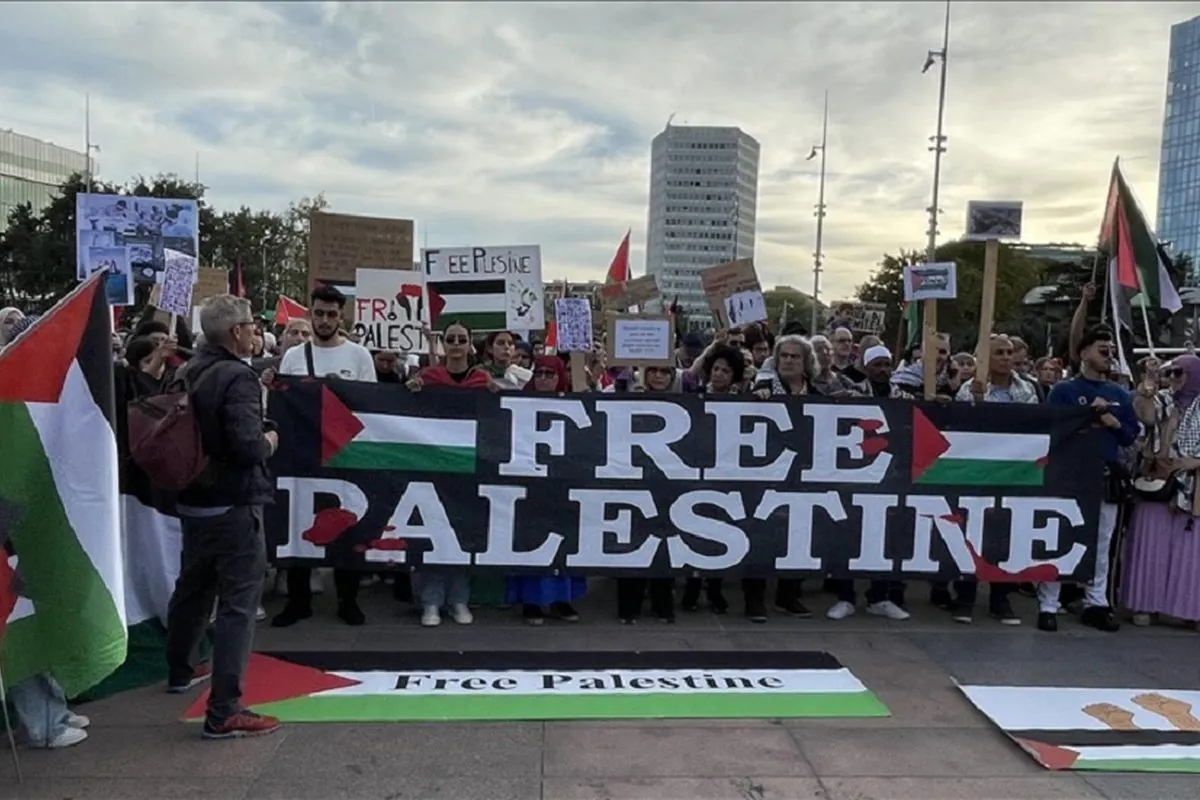
The same pattern can be seen in the fragmentation of advocacy groups and coalitions supporting the Palestinian people around the world. Their efforts are united around exposing the crimes of the occupation and supporting the Palestinian people, but they become divided when it comes to supporting Palestinian political elites according to their party affiliations and their political alliances with Arab, Islamic and socialist forces and parties. This creates considerable confusion over political visions and approaches to resolving the Palestinian question.
From this, we can conclude that the saying, “Everyone is a leader, but there is no leader with overwhelming popular support in Palestinian society,” is a factor in the Palestinian leadership crisis. This crisis is also fuelled by friendly fire from local political opponents, pushing some Palestinian political leaders to accept different forms of coordination with Arab states, even when this involves security coordination with Arab intelligence agencies, in order to strengthen their position against other Palestinian elites.
The Palestinian people and those who support them do not measure the strength of a Palestinian leader by the amount of money they possess or by their ability to communicate with the leaders of Arab, Islamic and foreign states and political parties. Rather, they judge leadership by its ability to improve the poor living conditions experienced by the Palestinian people, its ability to protect Palestinians from the crimes of the occupation, and its possession of a political project for establishing a democratic Palestinian society that accepts the coexistence of different ideas and the peaceful transfer of power.
Only then can we reach a genuine stage in which Palestinian leadership possesses representative legitimacy that is accepted across the Arab and Islamic world and embraces supporters of the Palestinian people around the world.
After that, establishing an independent Palestinian state becomes a natural consequence. The establishment of a Palestinian state would become a shared interest for all parties, Palestine would grow stronger, and the Zionist project in the Arab region would gradually diminish.