The Current Situation in Jordan During the New American War on Iran
By Khaled Ghannam
08/03/2026
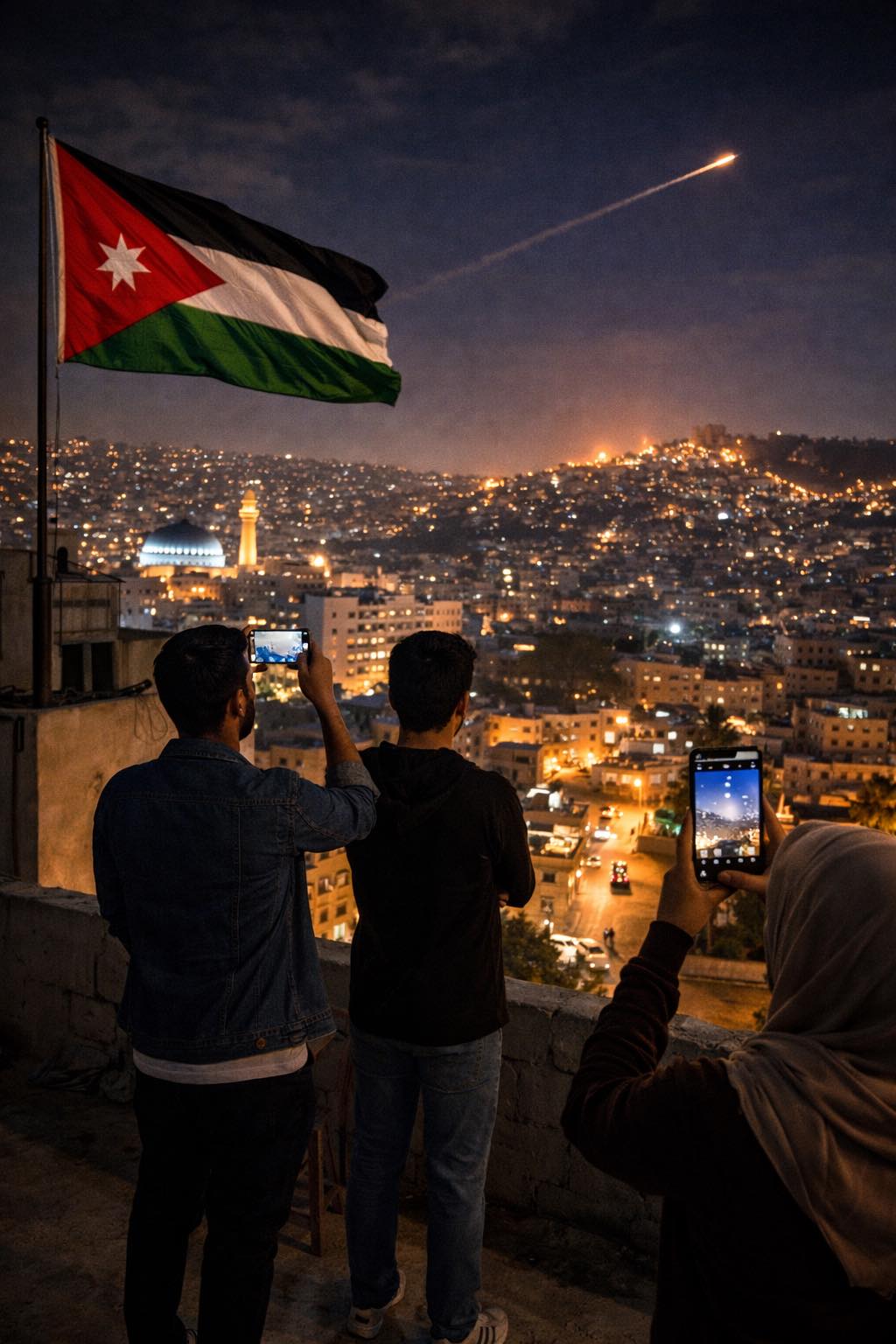
The skies over Jordan are filled with the movement of missiles during the American–Israeli aggression against Iran. It is well known that Jordan hosts a large number of American and European military bases and shares its longest land border with Israel.
There is a big difference between watching missiles on television screens and witnessing them firsthand from rooftops—a legendary sight for the vast majority of Jordanians, as it represents revenge for the thousands of Palestinians killed by the Israeli occupation army in the ongoing war of extermination in the Gaza Strip.
Sirens sound continuously across the suburbs of Amman, the capital of Jordan. We frequently hear explosions and the fall of missile fragments in several neighborhoods. At times, houses shake, especially after particularly loud blasts.
However, Jordanian cities lack public shelters for civilians during dangerous times. There are no roads protected by missile defense systems and no clear field plan for civilian protection. Such measures have existed for years in Israel, yet Jordan does not seem to feel under a real threat. In fact, the vast majority of civilians continue their daily lives as usual, seemingly unconcerned by the frequent sound of air raid sirens.
Official decisions are often incomprehensible to civilians because they appear illogical. For example, schools continue to operate normally, while universities have been completely closed. Some believe this is intended to prevent anti-war demonstrations; others speculate that university buildings may be used for other purposes. Officials, however, claim the closure is simply meant to reduce traffic congestion during Ramadan and insist the decision is unrelated to the war.
While authorities repeatedly state that Queen Alia International Airport remains open, we have heard that many flights have been cancelled. Flights to Baghdad have stopped entirely, and some planes have changed their routes at the last minute. Others have landed at airports in neighboring countries, with passengers then crossing Jordan’s land borders.
There are many sensitive areas in Jordan, particularly those close to the Jordanian–Israeli border and locations near American and European military bases. This makes large parts of the country potentially vulnerable to direct targeting, especially since American forces use bases in Jordan to launch attacks against Iran. Other American units are tasked with intercepting Iranian missiles before they reach Israeli territory.
Public anger in Jordan remains intense over the ongoing Israeli aggression against the Palestinian people and the continuing genocide in the Gaza Strip. Jordanians feel they have few ways to support Palestinians except by providing humanitarian and medical aid and by implementing strict boycott campaigns against companies that deal with the Israeli market.
Many young Jordanians risk filming incoming missiles and posting the videos on social media, often accompanied by vengeful statements against the racist policies of the Israeli government. Falling missile debris does not cause widespread panic or fear; instead, people often gather to film it or even collect fragments as souvenirs. This reflects the anger of many young Jordanians over the killing of thousands of Palestinians.
In reality, most Jordanian youth do not follow local or international news channels. Instead, they rely primarily on social media for brief breaking-news updates. They mostly see images of missiles falling on Israeli cities, while missiles landing in Arab areas are often perceived as targeting American bases scattered throughout the region. Many believe that the Iranian military does not intentionally target Arab civilians or government institutions.
Many Jordanians also know little about Iran’s internal political life or its regional objectives. There is a widespread lack of information about the country. Most people do not know the names of Iranian cities, details of Iranian culture, or Iranian products. Iran remains largely distant and unfamiliar due to the lack of direct communication between Jordanians and Iranians.
Some Jordanians believe that the U.S. administration is not genuinely seeking regime change in Iran. Instead, they argue that its real objective is to control Iranian oil resources, cut off cheap Iranian oil supplies to China, and open the Iranian market to American companies. They point out that the United States has previously exploited natural resources in several countries in the region—including Kuwait, Iraq, and Afghanistan—without achieving meaningful social justice.
Despite the war, there has been no major increase in the prices of food or basic necessities in Jordan. Merchants generally believe the conflict will not last long. Although Jordan depends heavily on imports and many air and sea routes have been disrupted, prices remain stable. This reassures civilians, who believe the war may last no more than a week before negotiations resume between Washington and Tehran.
Many people expect that negotiations between the Americans and Iranians will eventually resume and that the land border between Jordan and Israel will reopen before the end of Ramadan. Visits between Palestinians living in Jordan and those in the West Bank were very active before the war and are expected to return to their previous levels, as Ramadan is traditionally a peak season for such visits.